FemiCore Ingredients: A Complete Scientific Breakdown of All 9 Components (2026)
Introduction
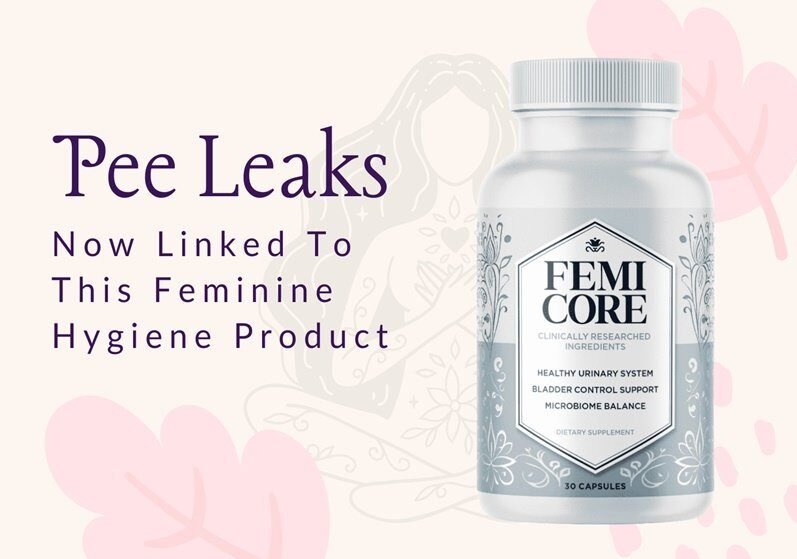
If you’ve been researching FemiCore, you’ve likely seen claims about its microbiome-restoring approach to bladder health. But what does that actually mean — and what’s inside the capsule?
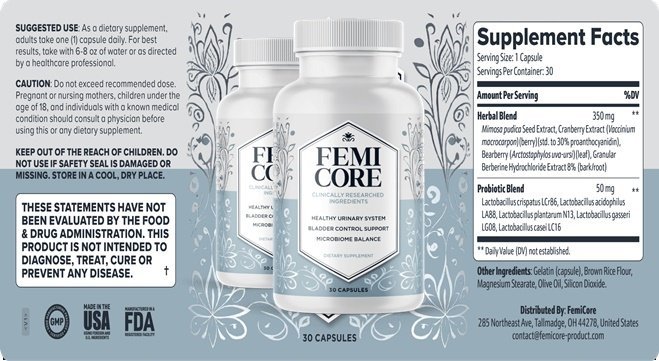
This article breaks down all 9 active ingredients in the FemiCore formula: five clinically-studied Lactobacillus probiotic strains and four synergistic botanical extracts. For each ingredient, we explain what it does, why it was included, and what the peer-reviewed research says about its role in feminine and urinary health.
Understanding the FemiCore ingredients is important because this formula takes a fundamentally different approach from conventional bladder health supplements. Rather than targeting one symptom with one compound, FemiCore addresses the underlying urinary microbiome imbalance that research has identified as the root cause of recurring UTIs, bladder urgency, and feminine dysbiosis.
What Makes FemiCore Different from Other Feminine Supplements?
Most feminine health supplements on the market rely on a single mechanism — usually cranberry extract to prevent bacterial adhesion, or a general-purpose probiotic for digestive health. While these approaches can offer temporary relief, they don’t address the deeper issue.
In 2020, researchers publishing in the American Journal of Obstetrics and Gynecology compared the urinary and vaginal microbiomes of women with healthy bladder control against women experiencing recurring UTIs and urinary incontinence. Their finding was striking: the two groups had fundamentally different bacterial ecosystems. Women with bladder problems had severely depleted levels of protective Lactobacillus strains — particularly Lactobacillus crispatus — while harmful bacteria were thriving unchecked.
FemiCore was formulated in direct response to this research. Its 9-ingredient formula targets microbiome restoration from multiple angles simultaneously: rebuilding the protective bacterial ecosystem, blocking bacterial adhesion, regulating bladder muscle function, and creating the internal environment where beneficial bacteria can survive long-term.
The 5 Lactobacillus Probiotic Strains in FemiCore
The probiotic component of FemiCore is what sets it apart from nearly every other supplement in this category. Rather than using generic gut-health strains like Lactobacillus rhamnosus or Bifidobacterium, FemiCore uses five strains specifically studied for their role in vaginal and urinary tract health.
1. Lactobacillus Crispatus — The Cornerstone Strain
Lactobacillus crispatus is the single most important ingredient in the FemiCore formula and the most clinically significant strain for feminine microbiome health. In a healthy vaginal and urinary tract, L. crispatus is the dominant bacterial species — and for good reason.
L. crispatus produces two essential protective compounds: lactic acid, which maintains the optimal vaginal and urinary pH between 3.8 and 4.5, and hydrogen peroxide, which creates a direct antimicrobial environment that makes survival nearly impossible for pathogens like E. coli. Without adequate L. crispatus, vaginal pH rises, protective defenses collapse, and harmful bacteria gain a foothold in the urinary tract.
The 2020 study referenced above found that women with recurring UTIs and urinary incontinence had significantly lower L. crispatus levels compared to women without these issues. Women who had undergone repeated antibiotic treatment showed the most severe depletion. This is why FemiCore prioritizes L. crispatus above all other strains — it is the foundation that every other microbiome defense depends on.
2. Lactobacillus Acidophilus — UTI Defense and Gut-Vaginal Axis
While Lactobacillus acidophilus is widely known for digestive support, its role in the gut-vaginal axis makes it directly relevant to urinary health. L. acidophilus works by crowding out pathogenic bacteria at a systemic level and supporting innate immune function throughout the urogenital system.
Critically, clinical studies have shown L. acidophilus actively prevents E. coli colonization in the urinary tract — the bacterium responsible for 80 to 90 percent of all UTIs. Because the gut and vaginal microbiomes share bacterial populations that migrate between them, maintaining L. acidophilus balance in the gut directly supports urinary tract protection.
3. Lactobacillus Plantarum — The Resilient Strain
One of the most acid-tolerant Lactobacillus species available, L. plantarum has a critical survival advantage over many competing probiotic strains: it survives stomach acid transit in significantly higher numbers, meaning more active colonies actually arrive where they’re needed in the intestinal and vaginal tract.
A 2022 clinical study demonstrated that L. plantarum supplementation significantly reduced both the frequency and severity of recurrent UTIs, with participants experiencing notably longer infection-free intervals compared to placebo. Its robust survival profile makes it an important contributor to the formula’s long-term colonization success.
4. Lactobacillus Gasseri — Vaginal Colonization Specialist
Lactobacillus gasseri has been specifically studied for its ability to colonize the vaginal tract and produce bacteriocins — natural antimicrobial compounds that directly inhibit competing pathogens. It works synergistically with L. crispatus to create and maintain the acidic environment that makes pathogenic colonization difficult.
Research shows L. gasseri demonstrates strong inhibitory activity against Candida albicans, Gardnerella vaginalis, and uropathogenic E. coli in clinical settings. It is particularly important for women who are also dealing with bacterial vaginosis alongside UTI issues, as the two conditions share a common underlying cause: Lactobacillus depletion.
5. Lactobacillus Casei — Immune Resilience
Lactobacillus casei serves as the immune system support strain within the FemiCore formula. It enhances the production of secretory IgA — the antibody that lines mucosal surfaces throughout the urinary and vaginal tract — and promotes microbiome diversity, which is a key marker of a robust and infection-resistant bacterial ecosystem.
L. casei’s primary contribution is resilience: helping the protective microbiome maintain equilibrium when challenged by stressors such as dietary changes, sexual activity, hormonal fluctuations, or antibiotic exposure. Without this resilience layer, even a well-restored microbiome can collapse quickly when life gets complicated.
The 4 Synergistic Botanical Extracts in FemiCore
The four botanical ingredients in FemiCore serve two purposes. First, they provide immediate urinary tract support during the two to four weeks it takes for the probiotic strains to establish stable colonization. Second, they create an internal environment where beneficial bacteria can thrive long-term. Importantly, each botanical was chosen for a distinct, non-overlapping mechanism.
6. Cranberry Extract (Standardized Proanthocyanidins)
The active compounds in cranberries responsible for urinary protection are proanthocyanidins, or PACs. These compounds work by preventing type 1 and type P fimbriated E. coli from adhering to the epithelial cells lining the urinary tract. Without the ability to attach, bacteria cannot colonize and are eliminated during normal urination.
The critical distinction in FemiCore’s cranberry ingredient is standardization. Most cranberry supplements — including juice products — contain insufficient PAC concentrations to produce a clinically meaningful anti-adhesion effect. FemiCore uses a concentrated extract standardized to the PAC dose demonstrated in research to actually prevent bacterial adhesion, not a nominal amount included as a label claim. A Cochrane Review of cranberries for UTI prevention found statistically significant results specifically with standardized PAC extracts in women with recurrent infections.
7. Bearberry (Uva Ursi) — Natural Urinary Antimicrobial
Bearberry (Arctostaphylos uva-ursi) contains arbutin, a compound that is absorbed systemically and then converted to hydroquinone in the urinary tract, where it exerts broad-spectrum antimicrobial activity against common UTI pathogens, including E. coli, Staphylococcus aureus, and Proteus mirabilis.
While cranberries prevent bacterial adhesion, bearberry directly inhibits bacterial growth. The two botanicals operate on different mechanisms and different phases of the infection cycle, making them complementary and non-redundant when combined. Clinical trials confirm bearberry reduces UTI-associated symptoms and supports urinary comfort, with the strongest results when used alongside other urinary protective compounds.
8. Granular Berberine — Bladder Muscle Regulation
Berberine is arguably the most pharmacologically distinct ingredient in the FemiCore formula, and one of the most important for women whose primary complaint is urgency and bladder leakage rather than (or in addition to) infection.
Research published in the Journal of Ethnopharmacology demonstrates that berberine modulates neurogenic contractile response in the bladder detrusor muscle — the involuntary smooth muscle whose hyperactivity directly causes urgency, frequency, and leakage in overactive bladder. No other ingredient in the FemiCore formula addresses this mechanism. Berberine also demonstrates selective antimicrobial activity: it inhibits pathogenic bacteria while supporting the growth of beneficial Lactobacillus species — making it doubly relevant to the formula’s microbiome restoration goals.
The “granular” specification refers to an improved particle size and formulation that enhances bioavailability, addressing conventional berberine’s notoriously poor absorption in standard capsule form.
9. Mimosa Pudica — The Gut-Microbiome Bridge
Mimosa pudica addresses a connection that is consistently overlooked in feminine health supplements: the gut-vaginal microbiome axis. The gut and vaginal microbiomes are not independent systems — they share bacterial populations that migrate between compartments, and disruption in gut microbiome health directly destabilizes vaginal and urinary microbiome balance.
Mimosa pudica supports digestive health and intestinal epithelial integrity, creating the systemic internal environment in which the five probiotic strains can colonize and persist throughout the entire system — not just the urinary tract in isolation. Research demonstrates its anti-inflammatory and gut-protective properties, including reduction of intestinal permeability that would otherwise allow pathogenic bacteria to migrate into the urogenital system.
How All 9 Ingredients Work Together
The logic of the FemiCore formula becomes clear when you map each ingredient to its mechanism and timescale.
In the first one to two weeks, the botanical extracts are already active: cranberry PACs block E. coli adhesion, bearberry produces urinary antimicrobial compounds, and berberine begins modulating bladder muscle response. These effects don’t require colonization time.
Between weeks two and six, the five Lactobacillus strains establish colonization, begin producing lactic acid and hydrogen peroxide, and start shifting the pH and bacterial composition of the urinary and vaginal microbiome toward the protective 3.8–4.5 range. This is when most women report the first noticeable improvement in bladder control and urgency.
From weeks six to twelve, the formula’s immune-support and gut-microbiome ingredients (L. casei, mimosa pudica) work to build resilience — so that disruptions like antibiotic exposure, stress, or hormonal changes no longer collapse the restored microbiome and trigger the next UTI cycle.
No single ingredient in FemiCore duplicates the role of another. Each component addresses a distinct mechanism, a distinct timescale, or a distinct part of the urinary microbiome system — which is precisely why a multi-ingredient formula is necessary for meaningful, lasting results.
Verdict: Is the FemiCore Formula Well-Designed?
Based on a review of each ingredient against published clinical literature, the FemiCore formula is well-constructed and internally coherent. It avoids two of the most common pitfalls in feminine health supplements: relying on a single mechanism (e.g., cranberry-only products), and including many ingredients at ineffective doses.
The standout ingredients are Lactobacillus crispatus — the dominant strain whose depletion underlies virtually all recurring UTI and bladder control issues — and granular berberine, which is the only ingredient in the formula specifically addressing bladder urgency at the muscle level.
For women who have tried and failed with antibiotics, standard cranberry supplements, D-Mannose, or generic probiotics, the FemiCore ingredients represent a meaningfully different approach: one that targets the root cause of the recurring cycle rather than managing individual episodes as they arise.
Only for: $49/per Bottle